


How long do semi permanent tattoos last?
Honest answer: 10 to 14 days on most skin types. Semi permanent tattoos apply like a water decal, then the vegan ink reacts with keratin in the outer epidermis, darkening within 24 to 36 hours before fading as your skin cell turnover pushes stained cells to the surface. Placement, aftercare and skin type shift the timeline by a few days.
The full fade timeline works like this. You apply the decal with water, wait a few minutes, peel it off, and see a faint mark. Over the next day, the plant-based ink reacts with keratin proteins in the top layer of your skin. By the morning after, the design looks dark, sharp, and surprisingly close to a real tattoo.
From there, the countdown starts. Days 1 to 4, the design stays crisp. Days 5 to 9, edges soften and the pigment loses depth. Days 10 to 14, the last patches lift with your natural exfoliation cycle. That range is what makes them so useful: long enough to feel real, short enough to swap for something new next month.
Placement changes everything. Forearms, calves and outer thighs stay clean the longest because clothes rarely rub against them. Fingers, wrists, knuckles and the inside of the elbow fade faster since those zones flex, sweat and see soap every day. If you want the maximum lifespan, pick a spot that stays dry and untouched.
Skin type also plays a role. Dry skin holds the stain a little longer than oily skin. Frequent hot showers, chlorine pools, saunas and heavy scrubs shorten the fade window by two or three days. A simple habit helps: pat dry instead of rubbing, and skip acids and retinol directly on the design.
How long do they last if you baby them? Realistically, you push toward the top of that 14-day window. Anyone promising four weeks with a plant based tattoo is stretching the truth. For deeper application tips, this guide to temporary tattoos that look real walks through every step. The best ones land in that honest zone. If you are still wondering which temporary tattoos are best, our 2026 ranking compares seven brands on look, application time and stated wear.
Is there a tattoo that lasts 2 weeks?
Yes, and it's exactly what plant-based semi permanent tattoos are built for. A water-transfer decal typically holds for 10 to 14 days, which lines up with a full two-week window. It's the sweet spot between a one-day festival sticker and a lifelong commitment you might regret at 3 a.m.
The two-week tattoo exists thanks to keratin, the protein that makes up the top layers of your skin. Unlike surface pigments in classic transfers, InkToday's plant-based ink bonds with that keratin layer once it's applied with water. That reaction creates a dark, realistic stain that sits under the surface, visible but temporary. It fades only when your skin naturally sheds those upper cells.
A quick comparison helps you pick the right format:
| Format | Realistic wear | Ink type | Starting price |
|---|---|---|---|
| Classic transfer decal | 2 to 5 days | Surface pigment | ~€3 |
| Plant-based semi permanent | 10 to 14 days | Vegan / keratin-reactive | €8 |
| Real tattoo | Lifelong | Intradermal ink | €100+ |
The middle row is where the plant-based format wins. You get realism without a needle, patch tests are simple, and the fade timeline is short enough to try a new placement each month. Tattoos are mainstream in Europe: tattoos and permanent make-up together are estimated at 10 to 20% of the general population, and the German LIFE-Adult cohort of 4,248 adults measured 7.4% carrying one or the other (Source: PLOS ONE, 2025). Two-week formats let curious first-timers test the water before booking a permanent piece.
For a wedding, a birthday trip, a new job start or a "does a shoulder piece suit me?" experiment, two weeks is plenty. You wear it through the event, snap the photos, and let it fade quietly. No laser, no cover-up, no drama.
Prices for a plant based tattoo at InkToday start at €8, which makes the trial phase very low stakes. You can grab three designs for the price of a bar tab and rotate them across a month. That's the appeal of a genuine two-week tattoo.
Two weeks is the honest ceiling, and our guide to long lasting temporary tattoos shows which designs and placements get there.
How do plant-based decals react with your skin?
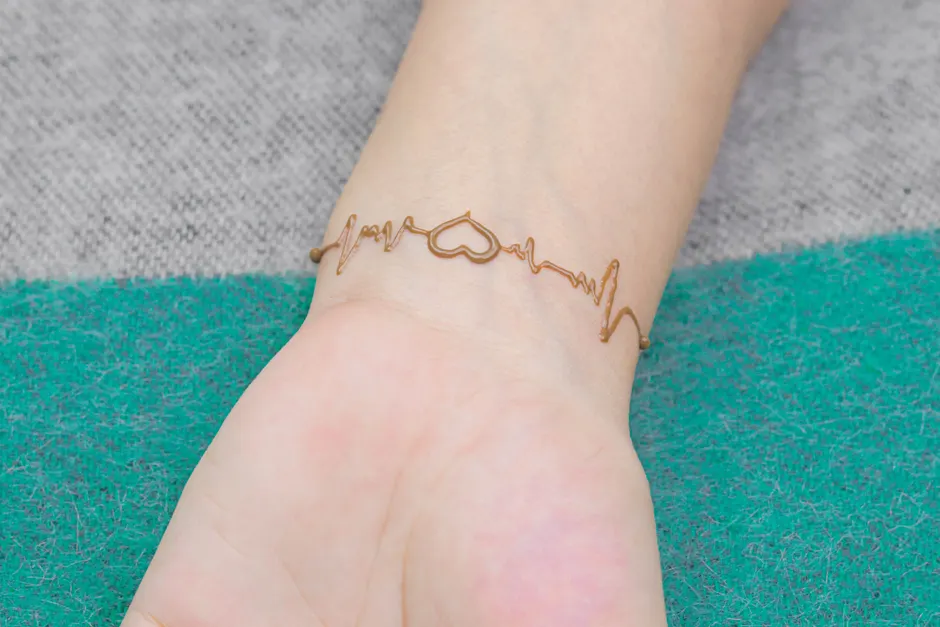
The magic happens on the outer epidermis, not deep inside. InkToday's plant-based ink is transferred through a water-activated decal application, then it chemically bonds with keratin, the protein in your top skin cells. That reaction creates a dark, tattoo-like stain that develops over 24 to 36 hours.
Here's the sequence in plain terms. You clean and dry the area, press the decal against the skin, apply water, and hold for about 30 seconds. The vegan ink transfers, and the design looks pale at first. Over the next two days, the reaction with keratin kicks in, the stain darkens, and the tattoo reaches its final shade. From there, skin cell turnover slowly carries the pigment away.
Because the reaction stays in the upper epidermis, no needle crosses the dermis. That's what separates plant-based decals from real ink. It also means the fade is inevitable and clean, with no ghosting or scar. This kind of decal relies on chemistry, not injection, which is why it suits vegan and eco-conscious buyers.
A patch test is smart before any first application. Stick a small piece behind your ear or on your inner arm, wait 24 hours, and check for redness. Skin reactions are rare but real, and skipping this step is the main reason people get surprised. Sensitive skin should also avoid freshly shaved zones, since micro-cuts make the reaction harsher.
InkToday designs its formulas around this exact chemistry: 100% vegan, plant-based ink, keratin-reactive pigment, waterproof finish once dry. The brand focuses on realistic linework and a fade timeline you can actually plan around. Pick your placement, run a quick patch test, apply, and let the reaction do its thing overnight.
Can you get a 6 month tattoo?
No true six-month tattoo exists outside of real ink under the needle. Anything sold as a half-year design either uses cosmetic pigment implanted like microblading, or it's marketing spin. Honest plant-based semi permanent tattoos last 10 to 14 days, full stop.
Six months is a long window, and your skin simply doesn't cooperate with that timeline for a topical stain. The epidermis renews itself every four to six weeks, so any pigment sitting in the upper layers gets carried off with dead cells. That's the fade timeline, and no plant based tattoo can outrun it.
The confusion often comes from PMU (permanent makeup), which is technically semi-permanent because it fades over 1 to 3 years. But that's a needle-based process on brows or lips, not a decal application you do at home. Very different category, very different risk.
If you want a design that sticks around for months, your real options are limited: cosmetic tattooing at a studio, or rotating fresh temporary body art every two weeks. Most people pick the second route because it's cheap, low-commitment, and lets you swap styles. Booking a needle for a six-month look defeats the point of going temporary.
We wrote a full piece on that single question: can a temporary tattoo really last six months.
Are there tattoos that last 3 months?
Three-month claims are usually exaggerated. Genuine plant-based tattoo stains fade within two weeks because skin cell turnover pushes the pigment out. If a brand promises 90 days from a topical product, check the ingredients — it's often henna mixed with dyes, which raises safety flags rather than lasting power.
The honest fade timeline for plant-based products lands between 10 and 14 days, with lighter placements (inner arms, décolleté) leaning shorter and thicker skin (outer forearm, calf) leaning longer. Beyond that, the stain breaks up and looks patchy — nobody wants a two-month-old design ghosting on their wrist.
Some sellers push "long-lasting" numbers by using PPD-based black henna, which is banned in cosmetic use across the EU under REACH Annex XVII and flagged by the FDA. InkToday's semi permanent tattoos rely on vegan, plant-based ink that reacts with keratin, and they stop where safety stops. A patch test still matters, but the risk profile is far cleaner.
The smart move is planning around two-week cycles. You get variety, your skin gets rest between applications, and you avoid the chemical shortcuts brands use to fake a three-month claim. Same math as a manicure — refresh it when it fades, don't force it to last forever. Rotation beats endurance every time.
| Type | Real duration | Method | Safety |
|---|---|---|---|
| Plant-based decal | 10–14 days | Topical, epidermis | Vegan, patch test advised |
| Black henna (PPD) | 2–4 weeks claimed | Topical, reactive dye | Banned in EU cosmetics |
| Cosmetic PMU | 1–3 years | Needle, dermis | Studio only |
| Traditional ink | Lifetime | Needle, dermis | Studio only |
Frequently Asked Questions
Do semi permanent tattoos hurt to apply?
Not at all. There's no needle, no broken skin, no numbing cream required. You press a decal onto clean skin, add water for about 30 seconds, and peel. The only sensation is cool moisture. Sensitive skin might tingle slightly as the ink reacts overnight, but that's the chemistry working, not damage. Needle-averse adults handle it fine.
Can I shower or swim with a semi-permanent tattoo?
Yes, once the stain has fully developed — usually 24 to 36 hours after application. Before that, keep the area dry so the keratin reaction finishes cleanly. After it darkens, the pigment sits inside the top skin cells, so water, sweat, and chlorine won't wash it off. Heavy scrubbing with exfoliants will shorten the life, so pat dry instead.
What's the best placement for longer wear?
Areas with slower cell turnover and less friction hold longest: outer forearm, calf, shoulder blade, upper back. Avoid hands, fingers, wrists, and anywhere covered by tight clothing waistbands — those spots rub the stain off within days. If you want the longest wear, pick flat, low-friction skin and skip fresh shaves.
Can I remove a semi permanent tattoo early?
Sort of. You can't erase it fully, but you can fade it faster. Exfoliating scrubs, salt scrubs, and oil-based cleansers speed up skin cell turnover. Swimming in chlorinated pools also lifts pigment quicker. Just don't use bleach or harsh chemicals — you'll irritate your skin without actually removing the stain any faster than exfoliation does.
Are these safe during pregnancy?
InkToday's semi permanent tattoos use vegan, plant-based ink with no needle involvement, which puts them in a safer category than real ink. That said, pregnancy changes skin sensitivity, and no formal studies confirm safety for pregnant users. The honest answer: ask your doctor first, run a patch test, and skip it if you're unsure. Better cautious than surprised.
How long do semi permanent tattoos last on darker skin tones?
The duration is the same — 10 to 14 days — but visibility differs. The plant-based stain develops dark, which reads clearly on lighter tones and shows as a subtle darker tone on deeper skin. Bold linework and larger designs photograph better on darker complexions. Test a small piece first to see how the pigment develops on your specific undertone before committing to a full sleeve.
Semi permanent tattoos give you the look without the lifetime commitment, and the honest 10 to 14 day window means you can actually plan around them. InkToday builds every design around vegan, plant-based ink, realistic linework, and a fade timeline that respects your skin. Ready to try one? Browse the full collection on the InkToday shop and pick your first design from €8.
These designs as temporary tattoos
Three InkToday designs on this theme, 8 € to 25 €, plus the custom option. Each lasts ten to fourteen days, which is enough to judge the size and the placement before anything lasting. The custom link starts from your own file, with no catalogue to pick from.
The mechanism is the same across the category, the execution is not. Our guide to the best temporary tattoos in 2026 compares the brands that use it on wear time, ink base and format.
 10 Minimalist Hand Tattoos14 €
 Little minimalist heart8 €
 3-star tattoo14 €
 Custom temporary tattoofrom 25 €
The same chemistry applies to your own artwork. See the custom semi-permanent tattoo page for the file rules that follow from it.
The pigment itself is plant-derived, which is a separate claim from the design being botanical. Our plant-based temporary tattoos page sets out the difference and what each one means for wear time.
If you would rather see the designs than the chemistry, our semi-permanent tattoos page lists the prices, the application steps and the 229 designs on one page.
About InkToday
InkToday is a young brand built around plant-based body art for people who like changing their look without the needle. Every design uses vegan, plant-based ink, waterproof once dry, with a clean 10 to 14 day fade. The team focuses on realistic fine-line style and honest wear times. For readers who want the deeper science behind realistic designs, our complete guide to temporary tattoos that look real covers application, longevity, and placement in detail.
A Swedish population study of 13,046 adults put tattoo prevalence at 29% (95% CI 27–30%), highest in the younger age groups (Source: European Journal of Public Health, 2025).