


How does Inkbox vs InkToday compare on longevity?
On paper, both brands promise up to two weeks. In practice, Inkbox vs InkToday plays out differently on real skin: expect roughly 10 days from Inkbox's Freehand ink, and a solid 10–14 days from InkToday's 100% plant-based formula, depending on your skin type, placement and aftercare.
The tech behind the wear is the key. Inkbox uses a proprietary fruit-derived ink they call Freehand, which is jagua-based and stains the top layer of skin over 24–36 hours. InkToday takes a different route: a 100% plant-based ink that reacts with the skin's surface keratin to build up color, with no jagua and no henna involved. Different chemistry, same promise: a real 2-week tattoo, not a sticker that flakes in the shower.
Placement matters more than most people think. On forearms, calves and outer thighs, both brands hit their upper range. On hands, fingers, wrists and anywhere you scrub often, expect wear toward the lower end of that range — still several days, just not the full two weeks. Sunscreen, chlorine and hot showers shave time off either way — that's chemistry, not a brand flaw.
Where the comparison gets interesting: consistency. Inkbox had years of R&D under BIC after the $65 million acquisition (Source: BIC Corporate press release, 2022), but the 2025–2026 shutdown period left customers hunting for the best inkbox alternative. InkToday kept shipping throughout, and builds its formula around a skin-safe, vegan, 100% plant-based ink.
If you want the deeper science on how a semi-permanent tattoo actually bonds to your skin, our guide on how semi-permanent tattoos work and how long they last breaks it down. The short version of this longevity match-up: both deliver on the 2-week claim when applied right — InkToday just edges ahead on the top end.
Which is better in the Inkbox vs InkToday price battle?
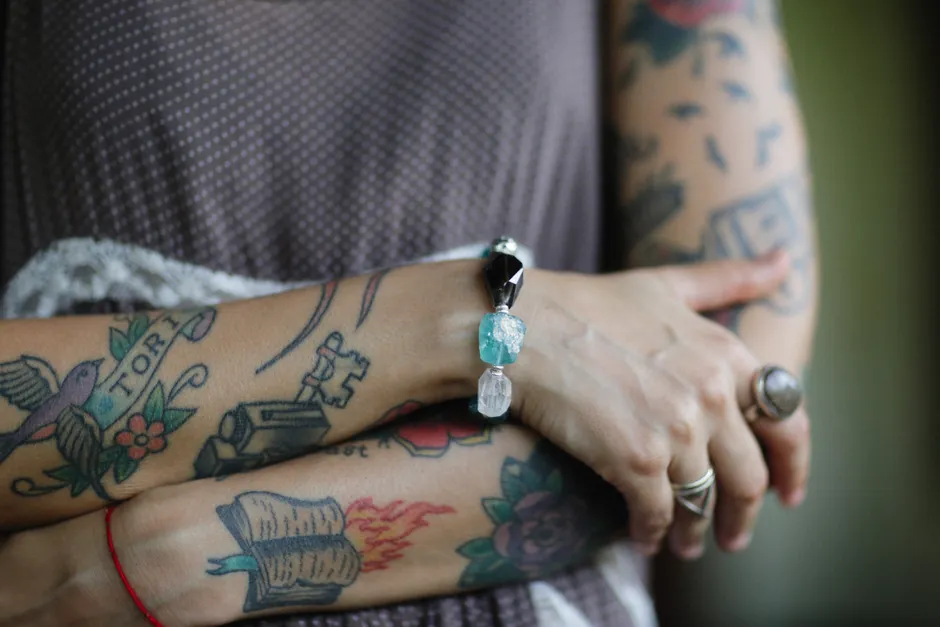
Price-wise, this Inkbox comparison isn't as one-sided as fans on either side claim. Inkbox designs typically run higher per piece, while InkToday sits in the €8–25 range depending on size. For a semi permanent tattoo comparison on cost-per-wear, both land in similar territory once you factor in shipping and design size.
Let's break down what you actually pay for with each brand:
| Criterion | Inkbox | InkToday |
|---|---|---|
| Typical single tattoo | Higher tier | €8–25 |
| Ink type | Freehand (jagua-based) | 100% plant-based (keratin-reactive, no jagua) |
| Vegan certified | Yes | Yes |
| Waterproof after set | Yes | Yes |
| Wear time (real) | Up to ~10 days | 10–14 days |
The sticker price only tells half the story: shipping fees, customs for European buyers, and design size push the total up fast. A palm-sized piece from either brand costs about the same once it lands on your doorstep — small minimalist designs stay cheapest, which is where most best inkbox alternative shoppers start testing.
There's also the risk-free angle. InkToday leans into the "try before you commit" pitch: order a small design, wear it 10–14 days, then decide if you want to scale up to a sleeve or a matching set with a friend. That's the smart way to shop — a €10 test beats a €200 regret at a real studio.
Bulk buyers and event planners (bachelorette parties, festivals, brand activations) get more flexibility with InkToday's curated packs than with one-off enterprise deals. Past the individual purchase, operational stability matters as much as the sticker price.
Bottom line on cost: neither brand is objectively "cheaper" — they're priced for the same market. Your call comes down to design fit, shipping speed to your country, and how much you value the extra 2–3 days of wear.
What custom options win in Inkbox vs InkToday?
Custom tattoo design is where this match-up really splits. Inkbox built its reputation on user-uploaded artwork and creator collabs. InkToday runs a curated catalog plus a full custom flow — upload your sketch, get a proof, wear it 10–14 days. For anyone wanting a personalized piece, both play, but the workflow differs.
Inkbox's strength was scale: thousands of artist designs, a massive template library, and a photo-to-tattoo tool. That ecosystem took a hit during the shutdown period, and the artist marketplace fragmented as creators moved to other platforms.
InkToday leans smaller and tighter. The catalog covers the main aesthetics — minimalist, fine line, geometric, nature, sexy, retro — and the personalized temporary tattoos design flow walks you from idea to proof without drowning you in options. Fewer choices, faster decision, less regret.
Where InkToday clearly wins: niche categories. Matching sets for couples or friends, wedding and bachelorette bundles, style-specific curated pages (spiritual, connection and love, symbols and script). If you're planning a group event, that structure saves hours versus scrolling an endless marketplace.
Custom quality also depends on what "custom" means to you. Uploading a photo of your dog and getting a stain-based rendering is one thing — expect stylization, not photorealism, from either brand. Line-based designs (script, geometric, fine line) translate better in plant-based stain inks than shaded portraits. That's a physics limitation, not a brand shortcoming.
The full custom comparison, brand by brand and price by price, sits on our custom semi-permanent tattoos page.
Is there another company like Inkbox?
Yes — several temporary tattoo brands operate in the same 10–14 day wear space, some using jagua ink and others using different plant-based formulas. The closest match to what Inkbox did is InkToday, which offers the same skin-safe, decal-free custom tattoo experience through its own 100% plant-based ink (no jagua). Other names exist, but few match the tech and catalog depth.
This match-up is the cleanest one-to-one because both go beyond surface stickers to create a real stain in the skin's top layer, not a decal that peels off in the shower — through different plant-based ink chemistries. Inkbox's genipin-based ink oxidizes into a deep blue-black shade; InkToday's vegetal ink reacts with surface keratin for a similarly realistic result, no jagua involved.
Other alternatives lean toward water-transfer stickers, which sit on the surface and last 3–5 days. That's a different product category entirely. If you want the 2-week tattoo experience — the kind that fades gradually and survives beach days — the shortlist stays small. Look at ink technology first, everything else second.
Why did Inkbox shut down, and what happened next?
BIC wound down its "Skin Creative" division — including Inkbox — starting in late 2025, with Inkbox operations fully stopping in February 2026, after the acquisition failed to deliver the growth BIC expected. Rising acquisition costs, thinning margins, and a saturated market pushed the call. Inkbox's original founders bought the brand back and relaunched it in mid-2026, but the interruption already pushed buyers toward alternatives.
The bigger story sits behind the balance sheet. Under BIC, Inkbox stopped feeling like an indie tattoo brand and started operating like a mass-market SKU. That shift alienated part of the original community — creators, artists, and buyers who valued the marketplace vibe. Between 2022 and 2024, competitors quietly built better custom flows and tighter shipping.
There's a regulatory backdrop too: temporary tattoo products have long been regulated as cosmetics in the U.S., and MoCRA added facility registration and product listing obligations that took effect in mid-2024 (Source: U.S. Food and Drug Administration, MoCRA overview, 2024). It doesn't explain Inkbox's shutdown alone, but it's part of why shoppers compare these two brands more carefully now — wanting stability and transparent formulas.
Frequently Asked Questions

Is Inkbox coming back?
Yes. Nothing officially "replaced" Inkbox — its founders bought the brand back and relaunched it in mid-2026. Some legacy artist collabs did not return, so check availability before ordering if you had a favorite pre-BIC design saved.
Is Inkbox or Ezink better for longevity?
Both are jagua-based, so raw longevity lands in a similar 7–14 day window depending on placement and aftercare. We don't have verified side-by-side data to call one more consistent than the other — application technique and skin type move the needle more than the brand choice here.
What's the best inkbox alternative for custom designs?
InkToday's custom flow handles uploads with a proof step, which matters when you're spending on a piece you'll wear for two weeks. Line-based artwork (script, fine line, geometric) translates cleanly. Heavy shading or photo-realism doesn't — that's a limit of stain technology, not any specific brand.
Are semi-permanent tattoo inks safe?
Jagua and genipin-based inks (like Inkbox's) are plant-derived and generally well tolerated; InkToday's own formula skips jagua altogether and uses a different 100% vegetal ink instead. Either way, patch test 24 hours before applying a large piece — a small percentage of users react to jagua specifically. Avoid any product marketed as "black henna," which contains PPD and is not a legitimate semi-permanent tattoo ink.
How does the Inkbox vs InkToday shipping speed compare?
Shipping varies by region. Inkbox ships from North America with variable international lead times post-relaunch. InkToday runs European fulfillment with faster delivery inside the EU and reasonable transit to the US. Check your destination before ordering — that gap often decides the purchase more than price.
Can I remove a semi-permanent tattoo early?
Not really. Once the ink has set into your skin, it fades on its own schedule as the outer skin layer sheds. Exfoliation speeds it up slightly. Plan the placement and design carefully — the 10–14 day commitment is real, which is exactly why a proof step on custom orders matters.
The honest read on this whole semi permanent tattoo comparison: both brands deliver a real 10-to-14-day semi-permanent tattoo through different plant-based ink formulas, but InkToday offers a tighter custom flow, faster European shipping, and operational stability that Inkbox lost during the ownership transition. If the Inkbox vs InkToday decision is stressing you out, try a small piece first — browse the InkToday temporary tattoo collection and test the 10–14 day wear risk-free.
Try the comparison on your own skin
A spec table only goes so far. These three are among InkToday's best-selling designs, priced 8 to 13 €, which makes them a cheap way to test the claims above yourself. For a like-for-like test against an old Inkbox custom, use a custom temporary tattoo.
Two brands is a narrow comparison. If you want the wider view, our guide to the best temporary tattoos in 2026 brings EZINK, EasyTatt, Tattly and the marker brands into the same table.
 Custom temporary tattoofrom 25 €
 6 Birds in Flight Tattoo13 €
 Minimalist one-line cat tattoo.10 €
 Little minimalist heart8 €
About InkToday
InkToday builds semi-permanent tattoos using a 100% plant-based ink — no jagua, no henna — that reacts with the skin's surface keratin to stain the skin for 10 to 14 days. The catalog runs from minimalist fine line to bold geometric, with a custom design flow for anyone wanting something personal. Everything is vegan, waterproof once set, and made for people who like changing their look without long-term commitment. Learn more about the science behind semi-permanent tattoos and how they work.